
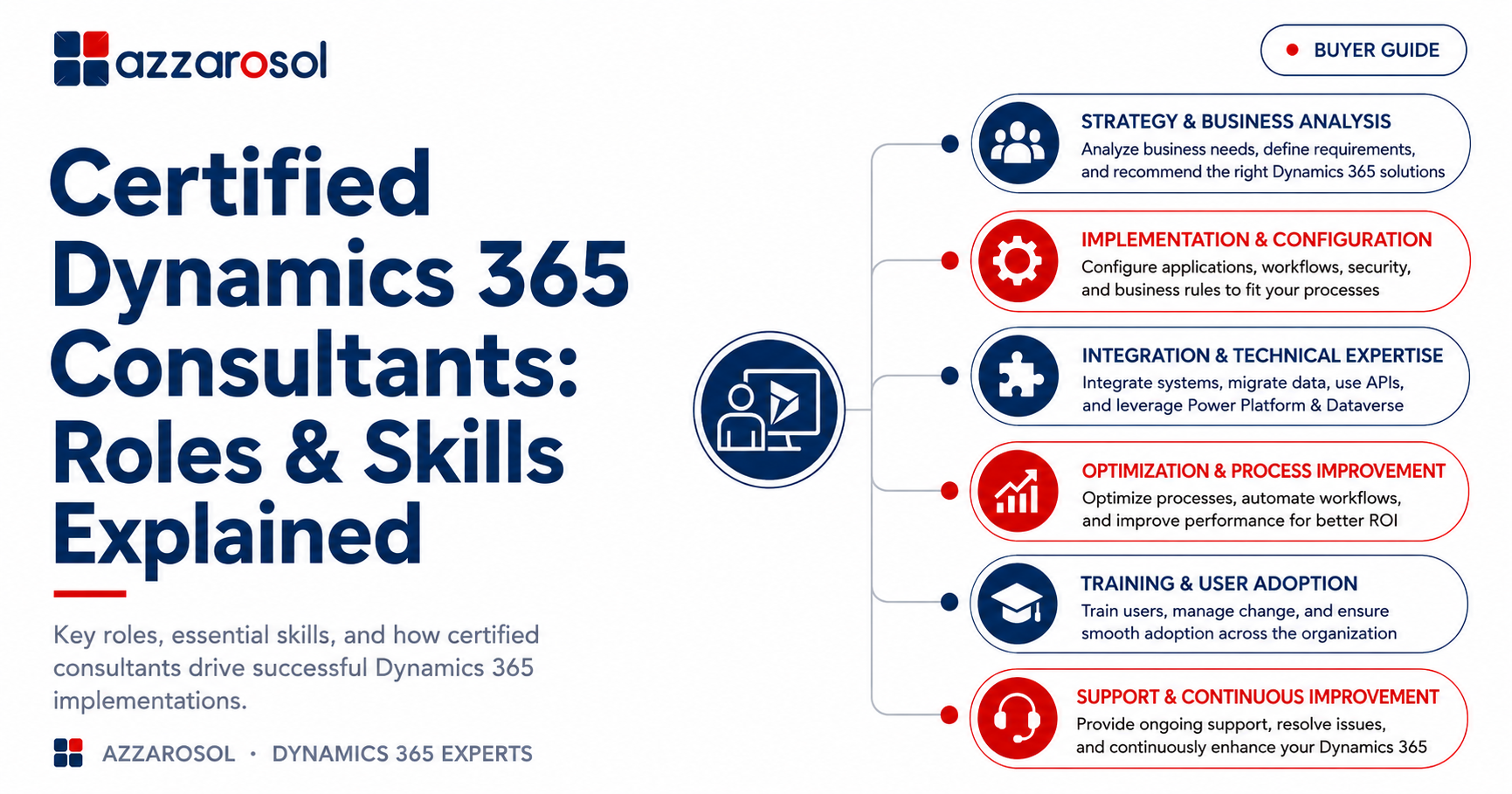
Certified Dynamics 365 Consultants help businesses plan, implement, integrate, and optimize Dynamics 365 while reducing costly errors, improving processes, and helping teams adopt the system effectively.
What Are Certified Dynamics 365 Consultants?
A certified Dynamics 365 consultant is a Microsoft-trained professional who helps businesses configure, implement, integrate, and optimize Dynamics 365 solutions based on their specific operational and technical requirements. These experts combine deep platform knowledge with business-process expertise to deliver practical ERP and CRM solutions that drive real results.
When you work with a Microsoft Certified Dynamics 365 Partner in India, you gain access to consultants who have demonstrated their proficiency through rigorous Microsoft certification exams. However, certification is just the beginning—the true value lies in how they apply that knowledge to your unique business challenges.
What Does a Dynamics 365 Consultant Do?
The main Dynamics 365 consultant roles cover planning, implementation, technical development, business analysis, and ongoing improvement. Their work usually starts before the software is configured.
A typical consultant may:
- Review existing business processes and identify gaps.
- Gather functional requirements from different teams.
- Recommend suitable Dynamics 365 applications.
- Configure workflows, security, and business rules.
- Coordinate data migration and system integration.
- Manage testing and deployment.
- Train users and support adoption.
- Monitor the solution after launch.
These Dynamics 365 consultant responsibilities and skills are important because an ERP or CRM system should support the way a company operates, not force employees into inefficient processes.
Certified Dynamics 365 Consultants: Functional Roles
A Dynamics 365 functional consultant focuses on business requirements and application configuration. Their Dynamics 365 functional consultant roles and responsibilities can include finance, sales, customer service, supply chain, or operations.
Depending on the project, you may work with a:
- Dynamics 365 ERP consultant
- Dynamics 365 CRM consultant
- Dynamics 365 Business Central consultant
- Dynamics 365 Finance consultant
- Dynamics 365 Supply Chain consultant
- Dynamics 365 Sales consultant
- Dynamics 365 Customer Service consultant
The key strength is translating business needs into practical functional requirements.
For organizations in specialized sectors like wholesale distribution or manufacturing, having a consultant who understands industry-specific challenges is particularly valuable.
Certified Dynamics 365 Consultants: Technical Roles
A Dynamics 365 technical consultant handles the technology behind the solution. Their work can involve APIs, integrations, security, development, data migration, and customization.
The Dynamics 365 technical consultant roles and responsibilities may include:
- API integration with external systems
- Azure integration
- Dataverse configuration
- Power Platform Implementation and Power Automate solutions
- Data migration
- Customization and development
- Testing and deployment
- Technical troubleshooting
A technical team may also include a Dynamics 365 developer, integration consultant, customization consultant, or solution architect. When evaluating technical expertise, look for experience with Microsoft Power Platform as this has become increasingly central to modern Dynamics 365 implementations.
Certified Dynamics 365 Consultants: Solution Architecture
A Dynamics 365 solution consultant or architect looks at the complete solution. They consider scalability, integrations, security, applications, data, and long-term business goals.
Solution architects play a crucial role in Dynamics 365 ERP and CRM implementation projects by ensuring that every component works together seamlessly. They think beyond immediate requirements to build a foundation that can grow with your business.
Key Dynamics 365 Consultant Skills Businesses Should Evaluate
The skills required for a Dynamics 365 consultant go beyond knowing where to click inside the software. The best professionals combine platform expertise with business and communication skills.
Important Dynamics 365 consultant skills include:
- Microsoft Dynamics 365 and its core applications
- ERP and CRM implementation knowledge
- Business process optimization
- Requirements gathering
- System configuration
- Workflow automation
- Data migration
- System integration and API integration
- Power Platform knowledge
- Testing and deployment
- User training and change management
- Problem-solving and communication
Dynamics 365 Customer Insights is particularly valuable for organizations looking to unify customer data and deliver personalized experiences. Similarly, Dynamics 365 Field Service expertise is critical for businesses with mobile workforces or service operations.
Certified Dynamics 365 Consultants: Technical and Business Skills
A consultant needs technical skills to build a reliable system, but business skills determine whether that system actually helps employees. For example, a consultant may understand Power Apps, Power Automate, Dataverse, and technical architecture. But they also need to understand why a sales team needs a certain workflow or why an operations team needs a specific inventory process.
That balance is what makes Dynamics 365 expertise valuable. The best consultants can explain complex technical concepts in plain business language and help stakeholders understand the implications of different decisions.
Industries like EPC (Engineering, Procurement, and Construction) , Financial and Professional Services , and Pharma Manufacturing often require consultants who understand specific regulatory requirements and industry best practices.
Why Does Dynamics 365 Certification Matter?
Microsoft certification can provide evidence that a consultant has studied specific Dynamics 365 capabilities and concepts. The Dynamics 365 certification benefits can include stronger platform knowledge, structured learning, and greater confidence when evaluating technical expertise.
However, businesses should look beyond Dynamics 365 consultant certification requirements.
Before hiring, ask about:
- Similar implementation projects
- Relevant industry experience
- Functional and technical expertise
- Integration and migration experience
- Project delivery methods
- Post-launch support
- Communication with business users
The goal is not simply to hire a Microsoft certified Dynamics 365 consultant. The goal is to hire someone who can apply that knowledge to your business. A consultant who has successfully navigated Dynamics 365 Upgrade vs. Customization vs. Reconfiguration decisions, for example, bring invaluable practical wisdom.
Common Problems Dynamics 365 Consultants Help Solve
Businesses often hire consultants because internal teams face challenges they cannot solve alone. How Dynamics 365 consultants help businesses depends on the project, but common problems include:
- Disconnected systems: A Dynamics 365 integration consultant can connect ERP, CRM, finance, e-commerce, or other business systems.
- Poor data quality: A Dynamics 365 migration consultant can plan data mapping, cleansing, validation, and migration.
- Too much customization: A consultant can identify when standard functionality is enough and when customization is justified.
- Low user adoption: Training and change management can help employees understand new processes.
- Unclear requirements: Business process analysis helps convert business problems into clear system requirements.
- Slow manual work: Workflow automation can reduce repetitive tasks and improve productivity.
These challenges often determine whether a Dynamics 365 implementation delivers the expected return. Working with experienced consultants can help you avoid common pitfalls like ERP data migration failures or post-go-live user adoption issues.
How to Choose the Right Dynamics 365 Consultant
Choosing the right Dynamics 365 consultant starts with your business goals, not a certification list.
Look for a consultant who can demonstrate:
- Relevant experience: Ask for examples of similar ERP or CRM projects.
- Functional knowledge: Make sure they understand your business processes.
- Technical expertise: Check experience with integrations, APIs, Power Platform, Dataverse, and migration.
- Industry understanding: Familiarity with your industry can reduce requirements and implementation gaps.
- Communication: Consultants must explain technical decisions in clear business language.
- Post-launch support: Implementation is not the end. Optimization and support remain important.
This approach is especially useful when comparing Dynamics 365 consulting services or selecting a Microsoft Dynamics 365 implementation partner . Consider reviewing case studies to understand how potential partners have helped businesses similar to yours.
Certified Dynamics 365 Consultants vs. Developers
A common question is Dynamics 365 consultant vs developer: are they the same?
Not exactly. A developer usually focuses more on code, extensions, integrations, and technical solutions. A consultant often works more closely with business users, requirements, processes, configuration, and implementation strategy.
A complex project may need both.
Likewise, the difference between a Dynamics 365 functional consultant vs technical consultant is mainly their area of responsibility. Functional consultants focus on business processes and configuration, while technical consultants focus on development, integration, data, and architecture.
How to Become a Certified Dynamics 365 Consultant
People interested in a Dynamics 365 consultant career path should build both technical and business knowledge.
A practical path includes:
- Learn Microsoft Dynamics 365 applications.
- Understand ERP and CRM fundamentals.
- Build knowledge of Power Platform and Dataverse.
- Develop requirements gathering and business analysis skills.
- Gain hands-on implementation experience.
- Pursue relevant Microsoft certification.
- Learn integration, data migration, and testing.
- Develop communication and project management skills.
This combination is more valuable than certification alone. Consultants who understand ERP implementation timelines , ERP ROI calculation , and vendor evaluation bring additional strategic value to organizations.
Conclusion:
Certified Dynamics 365 Consultants can play a critical role in successful ERP and CRM projects. They help businesses translate requirements into practical solutions, manage implementation risks, connect systems, migrate data, improve processes, and support users after launch.
The best consultant is not simply the person with the most certifications. Look for a balance of Microsoft certification, hands-on experience, business knowledge, technical skills, communication, and industry understanding.
Whether you need certified Dynamics 365 consultants for ERP implementation, CRM implementation, system integration, business process optimization, or ERP migration, choosing the right expertise early can prevent costly mistakes later. For specialized needs like excise license compliance with DISTI or document management solutions , look for consultants with specific domain expertise.
Ready to work with experienced Dynamics 365 professionals? Contact Azzarosol now to discuss your Dynamics 365 implementation, integration, customization, or support requirements. Our certified consultants bring deep expertise across industries and Microsoft technologies to help you achieve your business goals.

1 Comment